62nd AMSTERDAM World Conference on “Education, Humanities & Social Sciences Studies” (EHS3-26)


+91 9781001229, +66 62 601 8051,
+351 920 619 073
+91 9781001229, +66 62 601 8051,
+351 920 619 073

Full Articles/ Reviews/ Shorts Papers/ Abstracts are welcomed in the following research fields:
Education focuses on the theory, practice, and methodology of teaching and learning across different contexts.
Pedagogy & Curriculum Development
Instructional design and lesson planning.
Curriculum theory and evaluation.
Educational technology and e-learning.
Educational Psychology
Cognitive development in learners.
Motivation and classroom management.
Special education and neurodiversity.
Policy & Leadership
School administration and governance.
Economics of education and funding.
Global educational reforms and literacy initiatives.
Social Foundations of Education
Equity, diversity, and inclusion in schools.
History of educational systems.
Comparative education (international systems).
The Humanities study human culture, history, and creative expression, focusing more on critical and analytical methods rather than empirical data.
History
Ancient, Medieval, and Modern World History.
Historiography (the study of how history is written).
Military, political, and social history.
Philosophy
Ethics and moral philosophy.
Epistemology (the study of knowledge).
Logic and metaphysics.
Literature & Linguistics
Literary criticism and theory.
Comparative literature.
Phonetics, syntax, and sociolinguistics.
The Arts & Culture
Art history and visual culture.
Musicology and ethnomusicology.
Religious studies and mythology.
The Social Sciences use empirical and scientific methods to study human behavior and the complex relationships within societies.
Sociology
Social stratification, class, and inequality.
Urban and rural sociology.
Sociology of the family and gender.
Psychology
Behavioral and clinical psychology.
Social psychology and group dynamics.
Developmental psychology.
Political Science
International relations and diplomacy.
Political theory and ideologies.
Public policy and administration.
Anthropology & Archaeology
Cultural anthropology and ethnography.
Biological/Physical anthropology.
Prehistoric and historic archaeology.
Human Geography
Demographics and population studies.
Environmental studies and sustainability.
Geopolitics and spatial analysis.
Economics
Microeconomics and Macroeconomics.
Development economics.
Behavioral economics.

Prof. Dr. P. S. Sandhu
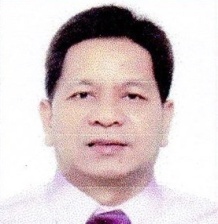
Dr. Alberto J. Valenzuela

Assoc. Prof. Dr. Hemantkumar P. Bulsara
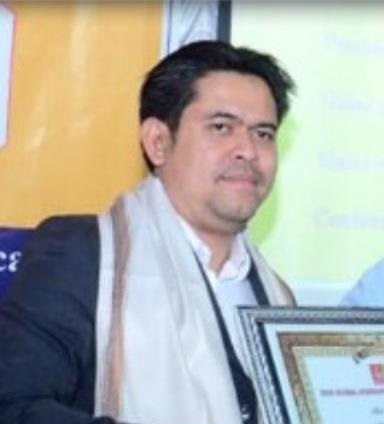
Dr. Tosaporn Mahamud.,Ph.D,

Dr.Yingthawornsuk Thaweesak,

Prof. Dr. B. Topcuoglu