PARIS 5th World Congress on Languages, Literature and Film Studies: PLLFS-27


+91 9781001229, +66 62 601 8051,
+351 920 619 073
+91 9781001229, +66 62 601 8051,
+351 920 619 073

Full Articles/ Reviews/ Shorts Papers/ Abstracts are welcomed in the following research fields:
Phonetics and Phonology: The physical production of speech sounds (articulatory phonetics) and the mental structuring of sound systems in specific languages.
Morphology and Syntax: The internal architecture of words (roots, prefixes, suffixes) and the structural rules governing how words arrange into sentences.
Semantics and Pragmatics: The literal meaning of words and sentences versus how context, subtext, and social cues alter meaning in real-world communication.
Historical Linguistics: Etymology, language evolution, the reconstruction of dead languages, and how language families branch out over centuries.
Sociolinguistics: How language varies across demographics, including dialects, sociolects, code-switching, and language planning or policy by governments.
Literary Theory and Criticism: The lenses used to analyze texts, such as Formalism, Psychoanalytic criticism, Marxist theory, Post-colonialism, and Feminist literary theory.
Textual Analysis and Poetics: The mechanics of creative writing, including meter, rhyme schemes, narrative perspective (unreliable narrators), symbolism, and allegory.
Historical Eras and Movements: The study of specific literary periods, including Classical literature, the Renaissance, Romanticism, Victorian literature, Modernism, and Postmodernism.
Genre Studies: The deep dive into specific formats of written expression, such as epic poetry, the gothic novel, tragic drama, dystopian fiction, and creative nonfiction.
Cinematography and Mise-en-Scène: The visual elements of film, including camera angles, lighting styles (chiaroscuro, high-key), lens choices, composition, framing, set design, and costume.
Film Editing and Sound Design: The pacing and rhythm of a film created through cutting techniques (montage, continuity editing, jump cuts) alongside diegetic and non-diegetic soundscapes.
Film Movements and History: The evolution of cinema through groundbreaking eras like German Expressionism, Soviet Montage, Italian Neorealism, the French New Wave, New Hollywood, and Contemporary Global Cinema.
Genre and Auteur Theory: The analysis of structural tropes in genres (Film Noir, Sci-Fi, Westerns) and the study of the director as the primary "author" of a film's creative vision.
Stylistics: The linguistic analysis of literary texts to determine how specific grammar patterns, syntax choices, and vocabulary create an author's unique voice.
Translation Studies: The theory and practice of turning a text from a source language to a target language, balancing literal accuracy against cultural nuance and poetic tone.
Philology: The study of historical languages through surviving literary texts, combining grammar, history, and literary critique to understand ancient cultures.
Adaptation Studies: The analysis of how a written text transfers to the screen, exploring what is lost, gained, or fundamentally altered when shifting from text to audio-visual media.
Screenwriting and Narrative Architecture: The study of how literary storytelling elements (character arcs, thematic depth, three-act structures) are condensed and formatted specifically for visual pacing.
Intertextuality: How films reference, critique, or parody classic literary works, and how modern literature adapts filmic pacing, editing styles, and visual metaphors into prose.
Dialogue and Dialectology in Film: How screenwriters use specific regional accents, slang, and speech patterns to instantly communicate a character's social class, origin, or psychological state.
Subtitling, Dubbing, and Audiovisual Translation: The technical and cultural challenges of translating film dialogue for global audiences while respecting screen space, timing constraints, and lip-syncing.
Constructed Languages (Conlangs) in Cinema: The creation of entirely functional, fictional languages for cinematic universes (such as Elvish, Klingon, or Na'vi) using strict linguistic principles.
Narratology: The universal study of narrative structure, examining how stories are formed, told, and processed across written words, spoken languages, and moving images.
Semiotics: The foundational study of signs, symbols, and signification, analyzing how meaning is constructed through linguistic text, literary metaphors, and visual cinematic language.
Cultural Studies and Ideology: How languages, literature, and films collectively reflect, reinforce, or subvert the political, economic, racial, and gender ideologies of the eras in which they were created.
Digital Humanities: The deployment of computational tools to analyze massive databases of literature text, linguistic patterns, and film databases to track cultural trends over time.
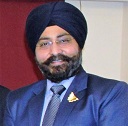
Prof. Dr. P. S. Sandhu

Assoc. Prof. Dr. Hemantkumar P. Bulsara
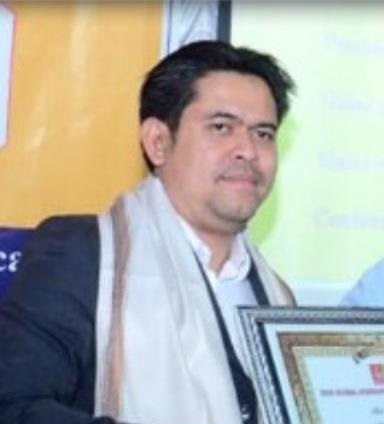
Dr. Tosaporn Mahamud.,Ph.D,

Dr.Yingthawornsuk Thaweesak,
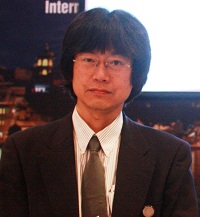
Prof. Dr. Kazuaki Maeda